
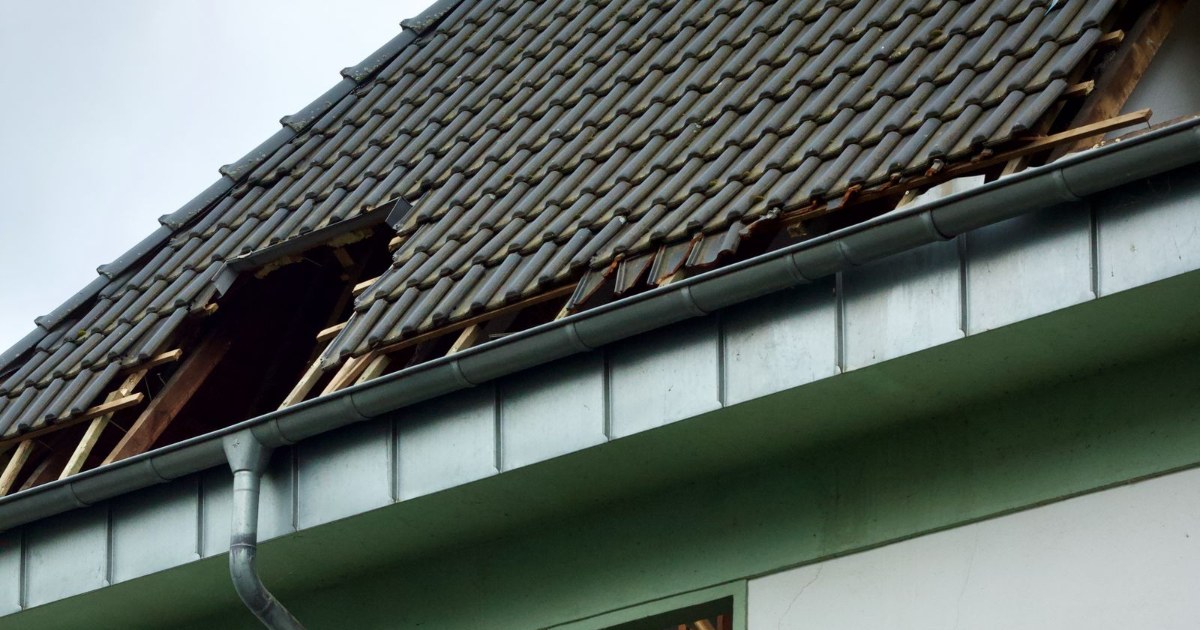
Quick answer: Does a home warranty cover a roof? Not a replacement. In the contracts we read, roof coverage is a limited leak benefit, often an add-on or a higher-tier feature, with a limit between $250 and $1,000. Storm damage is usually a homeowners insurance claim, not a warranty claim.
Best for: a small leak on a roof that was sound when coverage began. Not for: an old, worn, or storm-damaged roof.
Last updated: November 11, 2026. Contract details come from each company’s published sample agreement. Terms vary by state and plan, so check your own Coverage Summary.
Listen to the 80-second summary
Most people who search this are staring at a ceiling stain and wondering who pays. The honest answer is split in two. A warranty may pay for a covered leak repair up to a small limit. It does not pay for a worn-out roof, and it generally does not pay for storm damage.
So, does a home warranty cover a roof in practice? Below we compare five companies line by line, show how the limits stack up against real repair costs, and walk through three common situations so you can see where a claim would land.
Does a Home Warranty Cover a Roof? What the Coverage Means
Roof coverage in these contracts is narrow. Three points decide most outcomes:
- Leak only. The benefit is written around leaks, not missing shingles, hail dents, or a surface that has simply worn out. American Home Shield, for example, words it as repair of “non-structural roof leaks.”
- A dollar limit. The company stops paying at the limit, however much the repair costs.
- Often an add-on or a higher tier. Some companies sell it as an optional extra, and others include it only in a top plan, so it may not be in your base plan at all.
If you are still deciding what a warranty covers in general, start with what a home warranty is. A warranty covers the breakdown of systems and appliances. A roof is part of the structure, which is why it gets special, limited treatment.
Roof Leak Coverage, Company by Company
| Company | Roof leak benefit | Limit in the sample | Base plan or add-on | Where we read it |
|---|---|---|---|---|
| American Home Shield | ✓ Limited (non-structural leaks) | $1,000 | Listed under Additional Coverage Options. Which plans include it is not published in the contract | Page 7, state samples (July 2024) |
| America’s Preferred | ✓ Water leaks only | $550 | Listed on the confirmation page and in the coverage section | Terms page 2 of 6, and the confirmation page |
| First American | ✓ Limited | Up to $1,000 on Starter and Essential | Optional add-on for an extra fee on Starter and Essential. Included in Premium | California sample, pages 6 to 8 |
| Select Home Warranty | ✓ Limited | Not published in the sample | Add-on | Section 6.7.2: shingled leak patch under 1 square foot; roof replacement excluded |
| AFC Home Club | ✓ Limited | $250 | Add-on | Pages 4 to 5, Diamond sample |
A ✓ means the company lists some roof leak benefit. It does not mean every roof repair is paid, and every ✓ comes with a limit. Select’s sample does not publish one.
Two things stand out. First, the highest limit in the table is $1,000, which is below the top of the typical leak repair range. Second, the lowest, $250, would not cover most professional repairs at all. For a full side-by-side of the companies, see our ranking of the best home warranty companies.
How the Limits Compare With Real Roof Costs
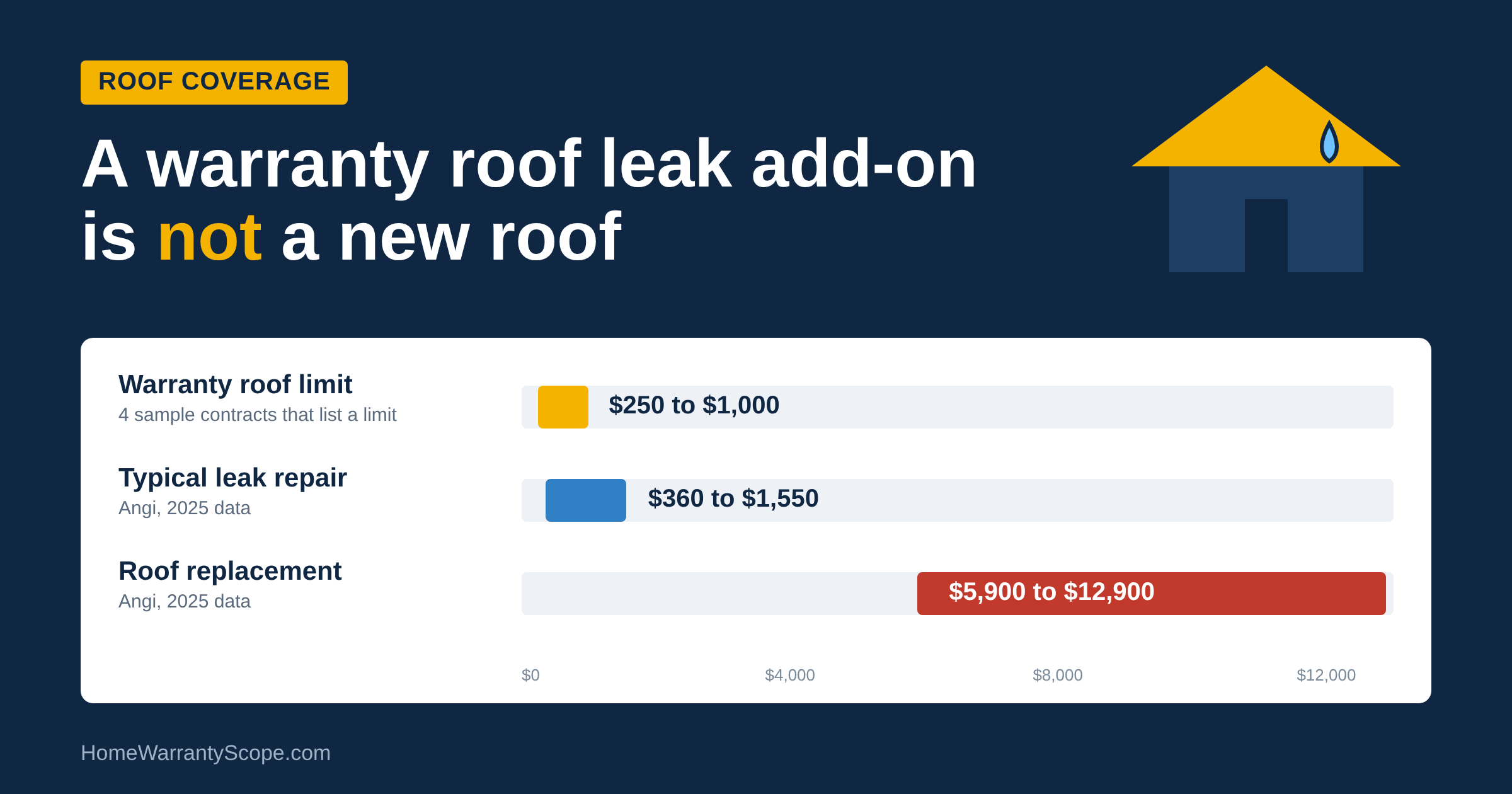
Angi’s 2025 data puts the average roof repair at about $1,155, with a normal range of $393 to $1,934. For a leak specifically, it says fixing a leaky roof often costs between $360 and $1,550. A full roof replacement runs $5,900 to $12,900.
- A $250 or $500 limit covers part of a small leak repair.
- A $1,000 limit covers most small repairs and not a larger one.
- None of the limits comes close to a replacement.
That gap is the reason a roof add-on is a convenience, not protection against a big bill. The same pattern of small caps on a costly repair shows up elsewhere. See our guide on whether warranties cover sump pumps.
Three Situations, and Where a Claim Would Land
These are illustrations, not guarantees. Your contract and your plan decide the outcome.
1. A small leak on a sound roof
You notice a stain after rain. The roof was in working order when coverage began, and you have the leak benefit on your plan. This is the case the add-on is written for. The company may pay for the leak repair up to the limit, and you pay anything above it plus the service fee.
2. Shingles lost in a storm
Wind or hail damaged the roof. In the 2-10 Home Buyers Warranty national sample (2DNA26, page 8, section 8.L), breakdowns caused by environmental events such as storms, wind, ice, and flood are not covered. Select’s sample likewise lists natural disasters as an exclusion (section 9.1.3). This is the situation for a homeowners insurance claim. Our guide to home warranty vs homeowners insurance explains where each stops.
3. An old roof that finally fails
The roof is at the end of its life and starts leaking in several places. Most contracts exclude conditions that existed before coverage began, and a roof worn out at purchase fits that description. Read how pre-existing conditions are handled before you count on a claim here. Realistically, this one is on you, which is why a roof inspection before buying matters more than any add-on.
What a Warranty Will Not Pay For
- Storms and weather. See 2-10 section 8.L above.
- Foundation and structure. Select’s sample lists these as exclusions in section 9.1.4.
- Consequential damage. Select’s sample (section 12) excludes damage that follows from a failure, including water damage and mold. Ceiling and insulation damage from a leak is the kind of loss this can touch.
- Roof replacement and weather, in America’s Preferred’s sample. Its roof benefit covers “water leaks only” that occur during the coverage period. It lists exclusions for roof-mounted fixtures, vents, gutters, earlier leaks, ice-related leaks, damage from walking on the roof, broken tile, poor repairs, replacing the entire roof, and storms, earthquakes, and fires.
- Existing problems. A roof that was already leaking or worn when coverage began.
Water that gets in through the roof is a different problem from ground water in a basement. If your concern is the basement, see whether home warranties cover sump pumps. For a private well, see whether they cover a well pump.
Is the Roof Add-On Worth It?
If you are weighing whether a home warranty covers a roof well enough to justify the extra cost, these questions settle most cases.
Ask these five questions before you pay for it:
- How old is the roof? A roof that was already worn when coverage began may be excluded.
- What is the limit? At $250 to $1,000, the add-on pays toward a repair, not a replacement.
- When can you buy it? Some plans offer add-ons only at purchase or within a set window, so check the window in your own contract.
- Is the waiting period over? Check the waiting period for your plan before you count on a claim.
- What does it cost against the benefit? Compare the add-on price with the limit. For the full math, see are home warranties worth it and how much a home warranty costs.
How a Roof Leak Claim Usually Works
- Document the leak. Photograph the ceiling, attic, and any water marks, and note the date you first saw them.
- Check your Coverage Summary. Confirm the roof benefit is on your plan and note the limit.
- Call the company before hiring a roofer. Check your contract’s claim section first. Paying for a repair on your own before the company approves it may not be reimbursed.
- Expect a service fee. Warranty plans charge a fee per visit. The amount is on your Coverage Summary or Declaration Page, and the sample agreements we read do not publish it.
- Ask for a denial in writing. If the claim is refused, read what to do after a denied claim.
Buying a Home With an Older Roof
If the roof is the reason you are looking at a warranty, the order of steps matters. Get a roof inspection from a roofer first. Then check homeowners insurance for storm cover. A home warranty inspection is a different thing and does not replace a roofer’s report. Sellers sometimes include a plan to reassure buyers, which we cover in our guide for sellers. Plans and rules differ by state, so you can also check our guides for Texas, Florida, and California.
Frequently Asked Questions
Does a home warranty cover a roof replacement?
In the contracts we read, no. The roof benefits are written as limited leak coverage with a dollar cap, far below the cost of a replacement.
Does a home warranty cover roof leaks?
Some plans do, usually as an add-on with a limit between $250 and $1,000 in the samples we read. Select does not publish its limit in the sample.
Does a home warranty cover storm damage to the roof?
Generally no. The 2-10 national sample excludes breakdowns caused by storms, wind, ice, and flood. Storm damage is normally an insurance question.
Can I add roof coverage after I buy a plan?
It depends on the company and the contract. Check the add-on window in your own contract before you count on it.
Is roof coverage worth it?
For a newer, sound roof it is a small extra that may cover a minor leak. For an older roof it is unlikely to help, because of the limit and the exclusions for existing wear.
The Bottom Line
So, does a home warranty cover a roof? Only as a limited leak repair. Do not buy a warranty to protect an aging roof. The limits are small and the exclusions are wide. A warranty can still be useful for the systems and appliances it covers well, and a roof leak add-on is a small extra, not a replacement plan. If your main worry is the roof, a roof inspection, an insurance review, and a repair fund will do more for you.
Sources
- Angi, How Much Does Roof Repair Cost? [2025 Data]
- American Home Shield state sample agreements, July 2024 (Arizona, California, Nevada, Texas), page 7
- America’s Preferred Home Warranty sample agreement (APHWDTCGP-0124)
- First American Home Warranty, California sample agreement (CS3T 03/24)
- Select Home Warranty sample agreement, sections 6.7.2, 9.1.3, 9.1.4, and 12
- AFC Home Club Diamond sample agreement (AFCHWD28), pages 4 to 5
- 2-10 Home Buyers Warranty national sample (2DNA26), page 8, section 8.L