
Last updated: October 21, 2026
- Typical cost: $350 to $900 a year, plus $75 to $150 per service call.
- Best for: older homes with aging systems, or buyers who ask for one.
- Biggest risk: paying for coverage that excludes the problem you were worried about.
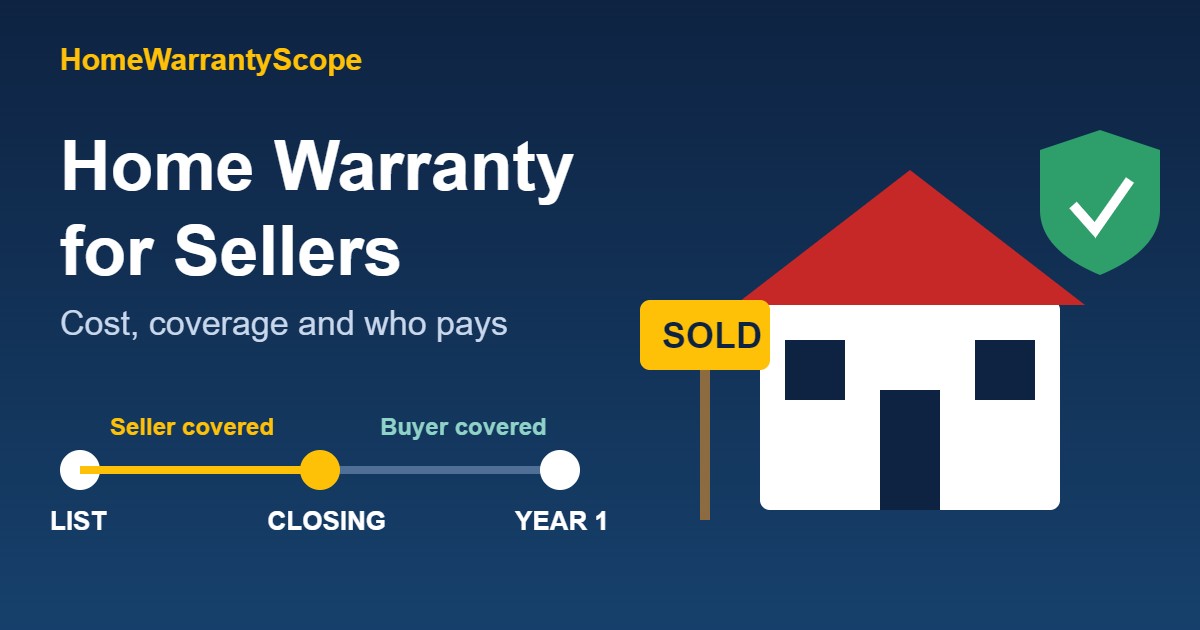
A home warranty for sellers protects you from a surprise repair bill between listing day and closing, and it gives the buyer a plan to inherit. That sounds simple, but sellers often buy the wrong product, pay for it twice, or expect it to cover problems the contract excludes. This guide explains how a home warranty for sellers works, what it costs, who pays, and when you can skip it.
If you are new to the basics, read our plain-English guide on what a home warranty is first, then come back here.
What Is a Home Warranty for Sellers?
There are two different things people call a home warranty for sellers, and mixing them up is the first mistake.
| Seller listing coverage | Buyer home warranty plan | |
|---|---|---|
| Who it protects | You, while the home is listed | The buyer, after closing |
| When it runs | During the listing period (American Home Shield says up to six months for its option) | From closing for a full term, usually one year |
| Who usually pays | The seller | The seller, the buyer, or both by negotiation |
| Covers a failure before closing | ✓ Yes, for listed items | ✗ No, it starts at closing |
| Passes to the buyer | ✓ Often, when you buy the full plan | ✓ Yes, that is its purpose |
American Home Shield describes it this way: the seller is covered while the home is on the market, and the warranty passes to the buyer and takes effect on the closing date (AHS seller guide). Other companies offer a similar split, so always ask which part you are buying.
How a Home Warranty for Sellers Works, Step by Step
- You choose a plan before or at listing. Many sellers do this through their agent.
- Listing coverage starts. If a covered system fails before closing, you file a claim and pay the service fee.
- A buyer is found. You offer the plan in the contract, or the buyer asks for one.
- The plan transfers at closing. The buyer takes over the remaining coverage. Some providers charge a transfer fee, and some do not.
- The buyer keeps the plan. After that, the buyer pays service fees and decides about renewal.
Timing matters. Liberty Home Guard advises starting a transfer within about 30 days of the sale to avoid a gap in coverage, and says it can be done with a call to the provider. Confirm the deadline with your own provider, because it varies.
What Does a Home Warranty for Sellers Cost?
Public cost figures put a seller plan at roughly $350 to $900 a year, or $30 to $90 a month, according to ConsumerAffairs. Service calls usually add $75 to $150 each, optional add-ons can add up to about $500 a year, and transfer fees are often $25 to $50 where charged. Our home warranty cost guide explains why quotes vary and how to compare them.
- Plan type: systems only, appliances only, or both.
- Home size and age: larger and older homes usually cost more.
- Add-ons: pool, spa, septic, well pump and roof leak coverage raise the price.
- Location: local labor and climate affect pricing.
One detail on the AHS option: it says seller coverage is limited to $1,500 during the listing period and covers the same items as its ShieldEssential plan, meaning heating, air conditioning, plumbing and electrical systems. It also says payment is collected at closing. That $1,500 is a coverage cap, not a price, so read the cap before you count on it for a large repair.
To work out your own numbers, use our free home warranty cost calculator.
Who Pays for a Home Warranty for Sellers?
Nobody has to. The cost can fall on the seller, the buyer or the agent, and it is often negotiated as part of the sale. Typical patterns:
- Seller pays: offered as an incentive, or to cover listing-period repairs.
- Buyer pays: added to closing costs when the buyer asks for coverage.
- Split: negotiated after the inspection report.
- Agent pays: some agents include it as a client gift.
If you file a claim before closing, you pay the service fee. After the transfer, the buyer pays fees on future claims.
Is a Home Warranty for Sellers Worth It? Pros and Cons
| Point | Verdict | What it means |
|---|---|---|
| Covers a surprise failure before closing | ✓ | Limits your out-of-pocket cost on listed systems. |
| Can calm buyer worries after an inspection | ✓ | It gives the buyer a safety net for the first year. |
| Fast transfer to the buyer | ✓ | Done by phone with most providers. |
| Proven to raise your sale price | ✗ | We found no reliable data, so do not count on it. |
| Covers problems you already know about | ✗ | Pre-existing conditions are usually excluded. |
| Replaces disclosure of known defects | ✗ | Disclosure rules still apply and vary by state. |
| No dollar limits | ✗ | Caps per item or per system are common. |
Our view: a home warranty for sellers is a negotiating tool and a small safety net, not a way to add value. It is easiest to justify when the buyer asks for it, or when you own older systems you cannot afford to replace before closing.
When a Home Warranty for Sellers Makes Sense
- Your HVAC, water heater or plumbing is older and you worry about a failure during showings.
- The inspection found aging systems and the buyer wants protection.
- The market is slow and a small incentive may help your offer stand out.
- You want one phone number for repairs while you are busy moving.
When you can skip it
- Your appliances are new and still under the manufacturer warranty.
- It is a strong seller market and buyers are not asking for incentives.
- You have cash set aside and prefer to choose your own contractor.
Pitfalls to Avoid
- Pre-existing conditions. A problem you knew about is usually excluded, and may need disclosure. See our pre-existing condition guide.
- Waiting periods. Some plans delay your first claim. Check the contract, and read our waiting period guide.
- Maintenance. A claim can be denied if a system was not maintained, so keep service records.
- Coverage caps. A low cap can leave you paying most of a large repair.
- Double paying. Ask whether the listing coverage is included in the buyer plan, or billed separately.
A warranty does not replace your legal duty to disclose known defects. Rules vary by state, so ask your agent or a real estate attorney.
Seller Checklist Before You Buy
- Ask whether you are buying listing coverage, a buyer plan, or both.
- Read the exclusions and the dollar caps. Paste the text into our free Contract Decoder.
- Find the waiting period and the start date.
- Ask about the transfer fee and the transfer deadline.
- Confirm who pays the service fee before closing.
- Check the company record. See our home warranty company comparison and our American Home Shield review.
- Save the contract and give the buyer the expiration date.
Buyers have their own questions, and we cover them in our home warranty checklist for homebuyers. And if you wonder whether a plan pays off at all, see are home warranties worth it.
Frequently Asked Questions
Should I buy a home warranty when selling my house?
Only if it solves a real problem: older systems, a buyer request, or a slow market. It is not proven to raise your price, and a seller with new systems can usually skip it.
How much does a home warranty for sellers cost?
Public figures run about $350 to $900 a year, plus service fees of about $75 to $150 per call. Add-ons and transfer fees can add more.
Does a seller warranty transfer to the buyer?
Most plans can be passed to the buyer at closing, usually with a call to the provider. Some charge a transfer fee, and deadlines vary.
Does a home warranty cover problems I already know about?
Usually not. Pre-existing conditions are commonly excluded, and known defects may still need to be disclosed under your state rules.
Who pays the service fee on a seller claim?
You do, if you file before closing. After the transfer, the buyer pays the fee on future claims.
This article is general information and not legal advice. Company terms change, so confirm every detail in your own contract.
Sources: AHS seller guide; ConsumerAffairs; Liberty Home Guard.